
Optical illusions challenge our understanding of confusing or unclear information. By studying how the brain reacts to these illusions, we can learn more about cognition, anatomy, and sensory processing. This is important for both healthy individuals and those with disabilities, as it helps us understand how the brain interprets visual information.
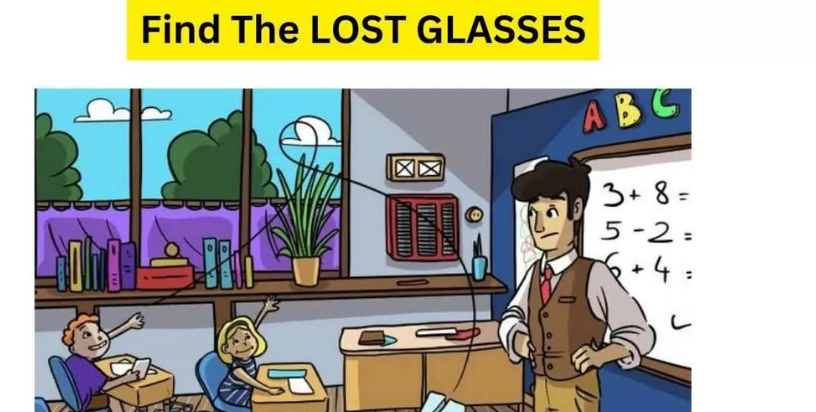
Find Lost Glasses Of The Teacher

Optical illusions are useful tools for investigating psychology and exploring different aspects of human vision, attention, memory, and decision-making.
In psychology and neuroscience research, optical illusions are used to study various aspects of human vision, attention, memory, and decision-making.
Look for the optical illusion answer here:

These illusions highlight differences in how people see things and their level of visual sharpness, making us question our understanding of reality. By engaging with visual challenges, we can gain a broader perspective that enhances our overall understanding.