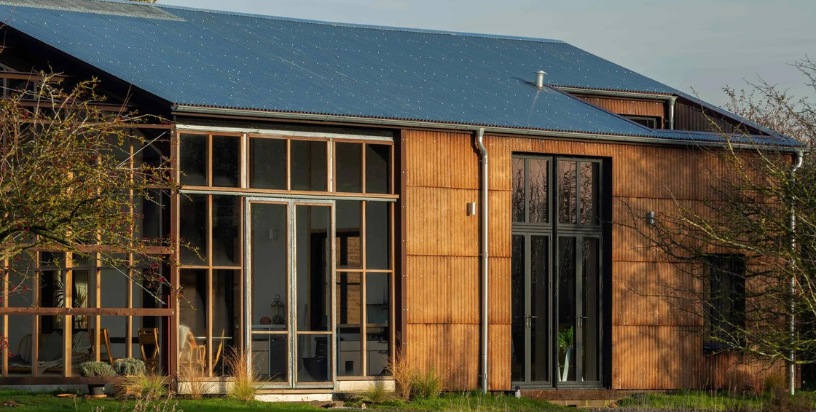
Flat House, in the UK, looks like a regular barn conversion, but it’s special inside. The owner, Gemma Barron, says it has a cool acoustic quality and stays warm even without heating. What makes it unique is that it’s made of hemp, a plant that grows fast and is eco-friendly.
Hemp is becoming a popular material for construction. It’s used to make “hempcrete,” a sturdy mix of hemp core and lime. This material is great for insulation, making buildings energy-efficient and reducing carbon emissions. Hemp also continues to absorb carbon over time.

The construction industry wants more sustainable materials to fight climate change. Hemp could help by capturing carbon, making buildings more eco-friendly. Yetunde Abdul from the UK Green Building Council says using natural alternatives like hempcrete is essential.
According to the European Commission, one hectare of hemp captures between nine and 15 tonnes of CO2 and grows in just five months. It’s even better than regular forestry at capturing carbon. Hemp also helps improve soil quality.

But before hemp can be widely used, there are challenges. Regulations, technical certifications, funding, and infrastructure need attention. Currently, hemp is mostly used by eco-friendly architects in Europe and North America.
Hempcrete isn’t used as a structural material but is excellent for insulation. It’s better for the environment than materials like fibreglass. Hempcrete has a unique quality – it heats up and releases heat slowly, regulating temperature. It’s also good at managing moisture in buildings.

Material Cultures, a design studio, used hemp from Margent Farm to build Flat House. The hempcrete panels were fitted around a timber structure, creating a home with a “circular ecology” approach. The exterior panels, made from hemp fibres and a natural resin, protect the house from rain.
While hempcrete has been around for a long time, it’s gaining popularity again. In France, where hemp growing was never outlawed, it’s been used in various projects. In 2020, a seven-storey social housing block in Paris used hempcrete for insulation.
However, challenges remain. Hempcrete is mostly used in small residential projects due to supply chain issues, costs, and lack of large-scale production. Legal regulations for hemp cultivation are also a hurdle.

Despite challenges, hempcrete is on the rise, especially in Europe and North America. The UN has recognized the benefits of industrial hemp, suggesting that countries clarify legal status and cooperate to boost production.
Material Cultures believes using sustainable materials like hemp can shift construction towards using local, natural resources. It’s an important step in making buildings more eco-friendly. While reducing construction is crucial, using fast-growing and carbon-sequestering materials like hemp could be a positive change.